Smart Money Habits for Kids: Building Financial Literacy Through Engaging Learning
Teaching children about money management is an essential part of their development, yet many parents and educators struggle to find effective, engaging resources that make financial concepts accessible and fun. Smart Money Habits for Kids offers a comprehensive solution designed to introduce young learners to the fundamentals of personal finance in a way that aligns with their developmental stage and interests. This 30-page educational ebook and workbook combines professional design with interactive learning activities, making it a valuable tool for parents, teachers, and caregivers who want to instill strong financial habits early on.
What Is Smart Money Habits for Kids?
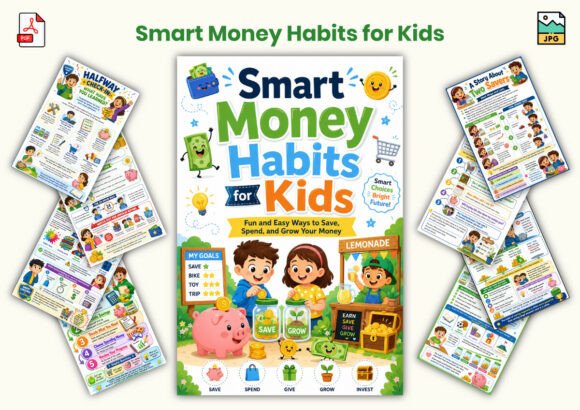
Smart Money Habits for Kids is a professionally designed educational resource that helps children understand the value of money, develop smart spending habits, build savings goals, and gain confidence in making thoughtful financial decisions. The content is presented in a fun, cartoon-style format that keeps children engaged while teaching them essential life skills. The resource includes 31 unique interior pages, high-quality PDF and JPG files, and a structured layout that ensures ease of use and readability.
The workbook is tailored for children, using child-friendly language and visual elements that simplify complex financial topics. It covers a wide range of subjects, from understanding money and setting savings goals to budgeting, tracking expenses, and practicing delayed gratification. These topics are introduced through interactive exercises, games, and real-life scenarios that help reinforce learning in a practical way.
How Smart Money Habits for Kids Fits Into a Broader Educational Process
Smart Money Habits for Kids can be integrated into various stages of a child’s learning journey, whether as a standalone resource or as part of a larger curriculum. For instance, it can be used before a family trip to teach budgeting and saving for travel expenses, during a school project on economics, or after receiving an allowance to help children practice managing their own money.
When used in conjunction with other educational tools, such as online banking apps for kids or financial literacy games, Smart Money Habits for Kids provides a well-rounded approach to teaching financial concepts. Its structured format allows it to complement classroom lessons, home-schooling programs, or even extracurricular activities focused on entrepreneurship or personal finance.
Parents and educators can also use this resource as a starting point for discussions about money, helping children connect what they learn in the workbook to real-world situations. This integration ensures that the knowledge gained is not only theoretical but also applicable, reinforcing long-term retention and behavior change.
Practical Implementation Tips for Educators and Parents
Implementing Smart Money Habits for Kids effectively requires thoughtful planning and consistency. Here are some practical tips for integrating the workbook into daily routines:
- Set a Regular Schedule: Dedicate specific times each week to work through the workbook, ensuring that learning becomes a consistent habit rather than an occasional activity.
- Use Real-Life Examples: Connect the concepts in the workbook to everyday situations, such as grocery shopping, saving for a toy, or earning an allowance. This helps children see the relevance of what they are learning.
- Encourage Active Participation: Involve children in decision-making by asking them to track their spending, set savings goals, or plan a small budget for a family outing.
- Combine with Digital Tools: Use apps like PiggyBot or Savings Spree alongside the workbook to provide a digital component that reinforces the lessons learned in print.
- Review and Reflect: Regularly review progress with your child, discussing what they’ve learned and how they can apply it in different contexts. This promotes critical thinking and self-assessment.
Key Topics Covered and Their Benefits
The workbook is divided into several key sections, each focusing on a specific aspect of financial literacy. Understanding these topics and their benefits can help parents and educators make the most of the resource.
Understanding Money: This section introduces children to the basics of currency, including coins, bills, and the concept of value. It lays the foundation for more advanced financial concepts by helping children recognize and differentiate between different types of money.
Setting Savings Goals: Teaching children how to set and achieve savings goals is crucial for developing discipline and responsibility. This section guides them through the process of identifying what they want to save for, estimating the cost, and creating a plan to reach their goal.
Saving Money Habits: This topic focuses on the importance of regular saving and the long-term benefits of building a savings habit. Children learn how to allocate a portion of their allowance or earnings toward savings, reinforcing the idea that saving is a rewarding, long-term investment.
Smart Spending Decisions: This section teaches children how to evaluate purchases, compare prices, and avoid impulse buying. It encourages them to think critically about their needs versus their wants and to make informed decisions about how to spend their money.
Budgeting Concepts: Introducing basic budgeting principles helps children manage their money effectively. They learn how to allocate funds for different purposes, such as savings, entertainment, and necessary expenses.
Money Tracking Skills: Keeping track of income and expenses is an essential skill that the workbook helps children develop. By recording their spending and savings, they gain a better understanding of where their money goes and how to manage it wisely.
Goal Planning Strategies: This section emphasizes the importance of planning and persistence when working toward financial goals. Children learn how to break down large goals into smaller, achievable steps and stay motivated along the way.
Sharing and Giving: Teaching children the value of giving back helps them develop empathy and social responsibility. This section encourages them to consider how they can use their money to support others, whether through donations, helping friends, or contributing to community projects.
Delayed Gratification: Delayed gratification is a powerful financial concept that the workbook introduces through relatable scenarios. Children learn how waiting for a bigger reward can lead to greater satisfaction and long-term benefits.
Building Lifelong Money Habits: The final section reinforces the importance of developing good financial habits early in life. It encourages children to continue learning about money and applying the skills they have acquired in their daily lives.
Why Choose Smart Money Habits for Kids?
Smart Money Habits for Kids stands out as a high-quality educational resource due to its engaging content, age-appropriate language, and interactive activities. The use of a fun cartoon theme and varied page styles keeps children interested and motivated to learn, making it easier for them to absorb and retain information.
The resource is also highly versatile, allowing it to be used in different settings, such as at home, in the classroom, or during after-school programs. Its compatibility with digital platforms ensures that it can be easily accessed and shared, making it a convenient option for busy parents and educators.
Moreover, the structured layout and clear instructions make it easy to implement without requiring extensive preparation or specialized training. This accessibility ensures that anyone can use the workbook effectively, regardless of their background or experience with financial education.
In addition to being an educational tool, Smart Money Habits for Kids also serves as a foundation for future financial independence. By introducing children to important money management concepts at an early age, it helps them develop the skills and confidence needed to make informed financial decisions throughout their lives.
Whether you're a parent looking to teach your child about money, an educator incorporating financial literacy into your curriculum, or a caregiver supporting a child's development, Smart Money Habits for Kids offers a valuable, engaging, and effective way to build strong financial skills in young learners.