Little Scientists Experiment Book: A Hands-On Journey into Science for Kids
Science is a world of wonder, discovery, and endless possibilities. For young learners, the best way to explore this fascinating subject is through hands-on experimentation. The Little Scientists Experiment Book is designed to make science accessible, engaging, and fun for children aged 5–10. This educational eBook offers a collection of simple yet exciting experiments that encourage curiosity, creativity, and critical thinking. Whether you're a parent, teacher, or homeschooling educator, this book provides an excellent resource for introducing kids to the basics of science in a safe and interactive way.
What’s Inside the Little Scientists Experiment Book
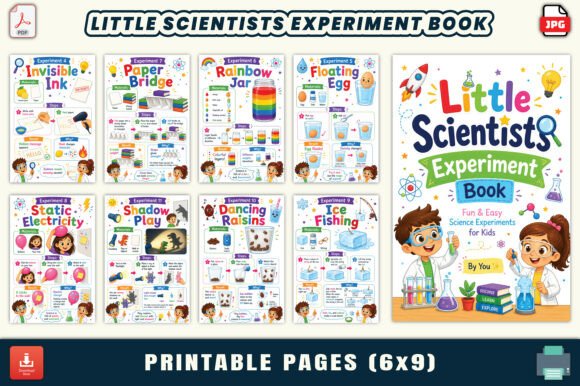
The Little Scientists Experiment Book is packed with 30 beautifully designed pages filled with easy-to-follow experiments that are perfect for home, classroom, or homeschooling environments. Each activity is carefully crafted to be both educational and entertaining, ensuring that kids stay engaged while learning important scientific concepts. The experiments use common household materials, making them accessible to families and educators alike.
Some of the standout experiments include:
- Magic Milk Color Explosion: Explore the power of surface tension and chemical reactions with food coloring and dish soap.
- Balloon Blow-Up Reaction: Discover the excitement of a chemical reaction using vinegar and baking soda to inflate a balloon.
- Walking Water Science: Learn about capillary action by watching water move through paper towels.
- Floating Egg Test: Investigate density and buoyancy by seeing if an egg floats in saltwater or freshwater.
- Mini Volcano Eruption: Create a fun and dramatic display of a volcanic eruption using baking soda and vinegar.
- Magnet Fun: Study magnetism and its properties with simple materials like paper clips and magnets.
- Plant Growth Activity: Observe how plants grow by planting seeds and tracking their development over time.
These experiments not only provide entertainment but also teach fundamental STEM (science, technology, engineering, and math) principles in a practical and memorable way.
Why Choose the Little Scientists Experiment Book
The Little Scientists Experiment Book stands out as a valuable educational tool due to several key features:
- Easy-to-Follow Instructions: Each experiment comes with clear, step-by-step directions that are easy for kids to understand and follow.
- Uses Simple Household Materials: No need for expensive equipment—most experiments can be completed with items found around the house.
- Encourages STEM Learning: The activities promote problem-solving skills, logical reasoning, and a deeper understanding of scientific concepts.
- Boosts Creativity and Curiosity: By allowing kids to explore and ask questions, the book fosters a love for learning and discovery.
- Perfect for Beginners: The experiments are tailored for young learners, making them ideal for those just starting to explore the world of science.
Adult supervision is recommended for some experiments to ensure safety, especially when dealing with chemicals or hot substances. However, most activities are designed to be safe and suitable for independent exploration under appropriate guidance.
Where Can You Use the Little Scientists Experiment Book?
The versatility of the Little Scientists Experiment Book makes it a great addition to various learning environments:
- Home Learning: Parents can use the book to engage their children in educational activities during school breaks or after-school hours.
- Classroom Activities: Teachers can incorporate the experiments into lesson plans to reinforce scientific concepts in a hands-on manner.
- Homeschooling: Educators who teach at home can use the book as a supplement to their curriculum, providing structured yet flexible learning opportunities.
Whether used as a standalone resource or alongside other educational materials, the Little Scientists Experiment Book offers a dynamic way to bring science to life for young learners.
Real-World Applications and Scenarios
Many of the experiments included in the Little Scientists Experiment Book have real-world applications that help kids connect scientific concepts to everyday life. For example, the Walking Water Science experiment teaches about capillary action, which is essential in understanding how plants absorb water from the soil. Similarly, the Floating Egg Test introduces the concept of density, which is relevant in fields such as oceanography and engineering.
By participating in these experiments, children develop a foundation for more advanced scientific studies. They learn to observe, hypothesize, test, and draw conclusions—skills that are crucial for success in STEM fields.
Evaluating the Suitability of the Little Scientists Experiment Book
When considering whether the Little Scientists Experiment Book is right for your child or students, there are a few factors to keep in mind:
- Age Appropriateness: The book is ideal for kids aged 5–10, but parents and educators should assess individual readiness and interest levels before beginning any experiments.
- Learning Objectives: If the goal is to introduce basic scientific principles, this book is an excellent choice. However, for more advanced topics, additional resources may be needed.
- Supervision Needs: While many experiments are safe for independent exploration, some require adult oversight. Be sure to review each activity beforehand to determine the level of supervision required.
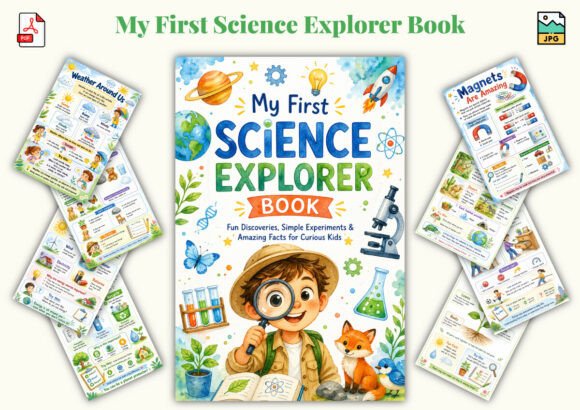
- Format and Accessibility: The book is available in JPG and PDF formats, making it easy to print or view on digital devices. The page size of 6 × 9 inches ensures that the content is easy to read and navigate.
Overall, the Little Scientists Experiment Book is a well-rounded resource that supports early science education in a fun and engaging way.
Conclusion
The Little Scientists Experiment Book is more than just a collection of experiments—it's a gateway to the world of science for young learners. With its hands-on approach, clear instructions, and variety of activities, it encourages kids to explore, question, and discover the wonders of the natural world. Whether used at home, in the classroom, or as part of a homeschooling curriculum, this book is a valuable tool for fostering a lifelong love of learning.
For parents, teachers, and educators looking for an effective and enjoyable way to introduce science to children, the Little Scientists Experiment Book is a must-have resource. It empowers kids to become curious, creative, and confident young scientists, ready to take on the challenges of the future.